Why FM software still leaves your team retyping job sheets
Nine in ten FM teams (90.5%) name manual work as their top pain, and software didn't fix it. Here's what to automate first and why it matters.

Nine in ten FM teams (90.5%) name manual work as their top pain, and software didn't fix it. Here's what to automate first and why it matters.
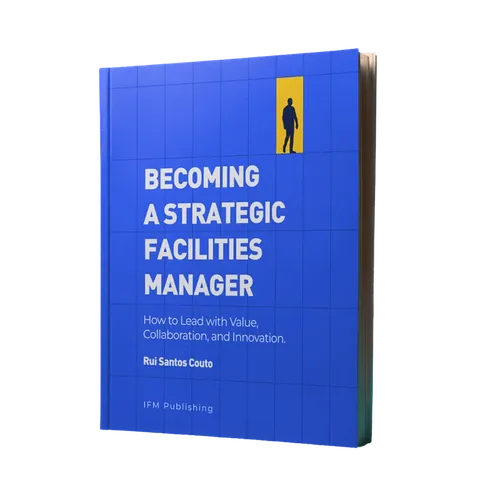
It's time to break the reactive loop. Becoming a Strategic Facilities Manager shows you how.
 Learn more
Manual work is the most common pain in facilities management. Nine in ten FM teams (90.5%) name it, according to The State of FM Operations 2027: The FM Gaps, and it doesn't go away when software arrives: 59.9% of teams that already use a CMMS or CAFM say they still do manual work.
The report calls this the admin gap: the manual work (retyping, chasing, reconciling) that keeps FM teams from using automation and leaves their data incomplete. It eats the time that should go on prevention, planning and people. Here's where it comes from, what it costs, and what to automate first.
The admin gap is the manual work FM teams do around their systems, such as retyping, chasing and reconciling, instead of the work those systems were meant to do. It's one of three gaps the report finds in FM operations, alongside the connection gap and the visibility gap.
The numbers come from conversations with 1,071 FM teams between September 2025 and September 2026:
Indicator | Share of FM teams |
|---|---|
Name manual processes as a pain | 90.5% |
Say their current setup leaves them doing manual work | 79.6% |
Say the same, among teams already using a CMMS or CAFM | 59.9% |
Name poor visibility as a pain | 73.4% |
Name fragmented systems as a pain | 70.1% |
Name at least one of manual work, fragmented systems or poor visibility | 94.6% |
Manual work is the pain that feeds the others. Information lives in five places, so someone copies it by hand, so the report at the end of the month is late and nobody quite trusts it.
Because most FM software captures part of the work, and the rest still happens on paper, by phone and in someone's inbox. The top complaint about current setups is the manual work around them (21.6%). Teams told us what that looks like:
One organisation runs a well-known enterprise CMMS. Technicians still get printed work orders, fill them in by hand, and someone types them back in later.
At one manufacturer, machine operators have no licence for the ERP where maintenance lives. Breakdowns get reported on paper, by phone and on WhatsApp, straight past the system built to capture them.
A site with dozens of IoT sensors still has someone check every alert by hand before a work order gets created.
In each case the software is there. The work around it is still manual.
Time first, and then everything that time was meant for. A maintenance service provider told us each of its managers spends four to six hours a day retyping paper job sheets into Excel. A UK contractor's director described starting work at 3:30 or 4am just to finish the paperwork before site visits, with up to eight hours a week lost to manual admin.
That time has to come from somewhere, and it usually comes from prevention. When the day goes on retyping and chasing, there's no room left to plan ahead, so teams fix what has already broken. The report calls this the FM Reactive Loop: the self-perpetuating cycle that keeps FM teams firefighting. Cutting admin through automation is one of four moves that break it, alongside connecting the chain, using data to anticipate, and aligning teams and suppliers on shared priorities.
The pain is everywhere, but it takes a different shape in each market:
Spain. Manual work hits hardest here: 95.5% name it as a pain. One logistics company described around 25,000 maintenance emails a year, with every job split across a CMMS, email, a quote-approval tool and a supplier-documentation platform.
Brazil. 91.0% name manual processes as a pain, and 81.6% say their current setup leaves them doing manual work. An engineering firm's office team downloads field data, cleans it by hand, types it into spreadsheets and attaches photos, with up to 3,000 to 6,000 PDF reports per project.
Portugal. 87.9% name manual processes as a pain. A water utility explained that every corrective work order has to be created twice, in two separate systems, just so it can track costs.
UK. 86.1% name manual processes as a pain, and 41.7% name low adoption and poor usability, against 27.4% overall. Tools that are hard to use, or that the team doesn't use, create admin of their own.
France. 80.0% say their current setup leaves them doing manual work. One manufacturer's after-sales technicians spend hours writing Word reports after each job, with the same data entered two or three times across the ERP, email folders and Excel.
Because a lot of them add something to check instead of taking something off the list. The report puts it plainly: plenty of new tools have promised to save time and ended up adding work, with more dashboards to check, more alerts to clear and more screens to log into.
This matters more as AI arrives. In Infraspeak's State of FM Operations Report 2026, 67% of FM professionals said AI and automation will shape FM within five years, and 53% said they lack the budget to innovate. With budgets that tight, every new tool has to take work away. The admin gap closes when technology does exactly that.
Start with the boring work that eats the day: sorting incoming requests, catching duplicates, logging document expiry dates, and planning schedules and routes. This is where AI agents earn their place in FM. They handle repetitive work well, with people approving what matters.
Keep the decisions with people: what's urgent, what's worth the spend, which supplier to trust. In practice, that's three moves:
Capture the work once, at the source. Technicians log jobs as they do them and requests come in through one channel. The same data then flows into reports, invoices and plans without anyone retyping it. If work orders are where your team retypes most, start with how to master work order management, and see how to reduce human errors in maintenance while you're at it.
Automate the admin. Let technology handle the routing, sorting, scheduling and chasing. A good preventive maintenance schedule is a natural first candidate, and so are the document and certificate dates behind compliance in preventive maintenance.
Keep the calls human. Priorities, trade-offs and relationships stay with your team. Add an approval step wherever a decision matters. For a wider view, read what automation looks like in FM and maintenance.
Infraspeak, the collaborative FM platform, is powered by agentic AI that keeps people in control. Here's how it applies to the admin gap.
Technology should take work away, and leave the judgement with people. Infraspeak Gear AI handles the admin from start to finish, and it runs on the data already in the platform, with no sensors required to start. Every workflow can include a human approval step, and the person doing the job sets the rules. Gear does the work. You call the shots.
The results show up in the hours. Gear AI suggestions are accepted 75% of the time, and Gear AI automations save teams up to eight hours a week on admin.
FM should run as one connected system. With Infraspeak Network, suppliers work inside the same operation as the teams they serve, so the work is logged once, in the same record.
The admin gap is one of three. The State of FM Operations 2027: The FM Gaps also covers the connection gap and the visibility gap, the findings for Brazil, Portugal, Spain, the UK and France, and five moves for 2027.

Infraspeak Platform
Capabilities
Industries
Resources


