Who holds your compliance evidence? In the UK, everyone
52.8% of UK FM teams name compliance as a pain. The evidence is spread across everyone who touches the building. Here's where to start.

52.8% of UK FM teams name compliance as a pain. The evidence is spread across everyone who touches the building. Here's where to start.

It's time to break the reactive loop. Becoming a Strategic Facilities Manager shows you how.
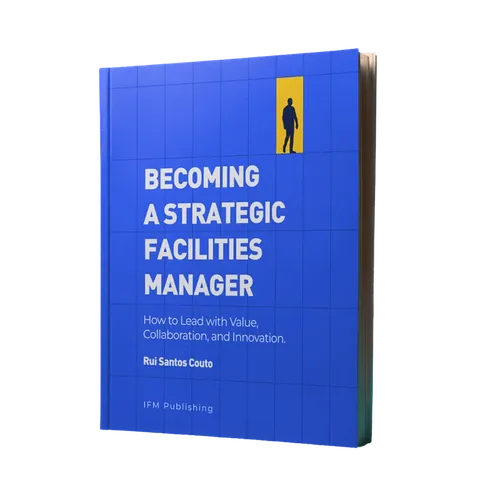 Learn more
UK FM teams worry about compliance more than any other market. More than half (52.8%) name it as a pain, against 29.5% across all markets, according to The State of FM Operations 2027: The FM Gaps. More than a quarter (28.0%) describe compliance and auditing as part of the operation itself, more than twice the global figure (12.1%).
The trouble is where the evidence lives. 84.7% of UK FM teams run mixed in-house and external maintenance teams, so certificates, inspection records and job sheets end up spread across everyone who touches the building: your own technicians, your contractors, and whichever inbox the last report landed in.
The report calls it the gap in the UK: compliance. Here's where it comes from, and where to start closing it.
The report draws on conversations with more than 160 UK FM teams (15.0% of the sample) between September 2025 and September 2026. The UK skews larger than other markets: half are small and medium businesses (49.7%), 41.8% mid-market and 8.5% enterprises. FM service providers are the biggest group (23.5%), followed by offices and other property owners (20.5%), hospitality and leisure (13.9%) and education and the public sector (12.0%).
Here's how the UK compares:
Indicator | UK | All markets |
|---|---|---|
Name compliance as a pain | 52.8% | 29.5% |
Describe compliance and auditing as part of the operation | 28.0% | 12.1% |
Run mixed in-house and external maintenance teams | 84.7% | 74.5% |
Use a CAFM | 13.6% | 4.3% |
Use a CMMS | 11.1% | 19.0% |
Use Excel | 59.3% | 56.3% |
Name low adoption and poor usability as a pain | 41.7% | 27.4% |
The UK is the one market where CAFM is common, and it's still the market where compliance worries teams most. More than a quarter of teams (27.8%) also rely on internal or custom-built tools. And software only helps if people use it: tools that are hard to use, or that the team doesn't use, create admin of their own.
Because compliance is a handoff problem. Almost all UK FM teams (97.5%) have mixed teams, multiple sites or both, and every job that moves between people is a chance for a date, a photo or a signature to drop out of the record.
At one local authority, the helpdesk process is "double handling": the in-house team logs a job, it "hops over the fence" to the FM provider, and the provider assigns a priority and shares the information back. Every hop over the fence is a place where the evidence can stay on the other side.
The pressure lands on both sides of the contract:
If you're an FM service provider, clients increasingly want proof of work: photos, timestamps and signatures. One UK contractor bidding for a large maintenance contract described its own setup (spreadsheets, Word documents and informal processes) as "knife and fork".
If you run your own buildings, much of your compliance evidence sits with your contractors. When the contract changes, the maintenance history can leave with them.
If you need a refresher on what you're on the hook for, our guide to statutory compliance in facilities management covers the essentials.
One manufacturer ran all its maintenance on spreadsheets and was "100% dependent on human memory" to schedule preventive work and statutory inspections. A compressor locked out after overrunning its 2,000-hour service interval and needed an emergency same-day contractor callout. At least the compressor told someone. An overdue statutory inspection doesn't switch itself off.
Elsewhere in the report, one multinational found that a fire certificate at one of its offices had been expired, unnoticed, for four years. This is the FM Iceberg at work: clean buildings and closed work orders sit above the waterline, while compliance, contracts and supplier performance sit below it, where the risk lives. UK teams can see the iceberg better than most, since they name compliance more than any other market. The evidence is still underwater.
Keeping it afloat by hand takes its toll. One maintenance contractor's director described starting work at 3:30 or 4am just to finish the paperwork before site visits, with up to eight hours a week lost to manual admin. Manual processes still top the list of pains in the UK (86.1%). There are better ways to improve compliance in preventive maintenance than an earlier alarm clock.
The report's move for the UK in 2027 is to bring compliance evidence to the surface: certificates, inspections, asset records and supplier records in one shared place, visible before an auditor asks. In practice, that's four steps:
Put the evidence in one shared place. Certificates, inspection records, asset records and supplier records, together, instead of spread across shared drives and inboxes.
Connect your contractors to the same record. When the contractor logs the job, the photo and the signature in the same place as your team, nothing has to hop over the fence.
Let the system do the remembering. Schedule statutory inspections and service intervals, flag what's coming up, and let automation do the chasing. Your team still decides what's urgent and what's worth the spend.
Pick the numbers you'll show leadership. SLA compliance, cost per site, inspections completed on time. Report them every month, and run a regular maintenance audit so the first audit of the year isn't the external one.
Infraspeak is a collaborative FM platform, powered by agentic AI that keeps people in control. It's built around one idea: FM should run as one connected system.
One shared record for everyone. In-house teams, suppliers, contractors and clients work in the same environment. With Infraspeak Network, suppliers work inside the same operation as the teams they serve, and the history stays with the asset, whoever holds the contract.
Automation that takes work away. Infraspeak Gear AI handles the admin from start to finish, and it runs on the data already in the platform, with no sensors required to start. Every workflow can include a human approval step. Gear AI suggestions are accepted 75% of the time, and Gear AI automations save teams up to eight hours a week on admin.
An audit trail that builds itself. When every job is logged in one record, with its photos and signatures, the evidence is already there when the auditor asks.
The UK findings are one part of the story. The State of FM Operations 2027: The FM Gaps covers the admin gap, the connection gap and the visibility gap, the findings for Brazil, Portugal, Spain and France, and five moves for 2027.

Infraspeak Platform
Capabilities
Industries
Resources


