Food courts: turning a critical area into an operational advantage
For a lot of visitors, the food court is where a shopping trip turns into something longer. It's also where operational problems show up first.

For a lot of visitors, the food court is where a shopping trip turns into something longer. It's also where operational problems show up first.

It's time to break the reactive loop. Becoming a Strategic Facilities Manager shows you how.
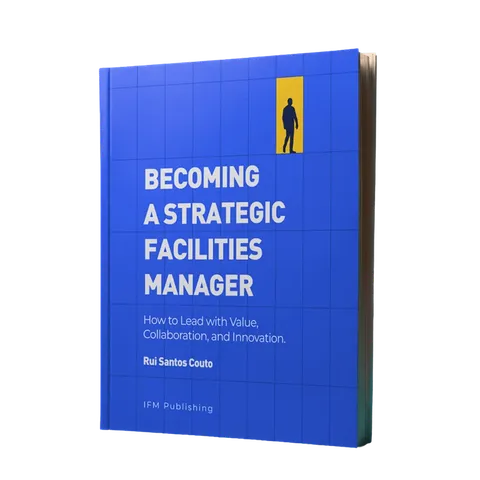 Learn more
Running a food court is one of the most demanding jobs in a shopping centre. Done well, it becomes a real measure of how strategic the wider operation actually is: whether it can coordinate comfort, safety, cleaning, tenants, suppliers and data all at once, in the highest-traffic part of the site.
For a lot of visitors, the food court is where a shopping trip turns into something longer. It's also where operational problems show up first. The wrong temperature, poor cleaning, queues, smells, infrastructure faults or a common area that's out of action all shape how visitors feel about the whole centre, not just that one corner of it.
Superintendents, operations, engineering and facilities teams already know what can go wrong in a food court. The real question is how to bring those risks down in a way that's predictable, measurable and repeatable.
No other part of the site packs in this many critical factors at once.
In a few hundred square metres, you've got:
Restaurants and food operations: each tenant with its own equipment, suppliers and routine, all sharing the same infrastructure;
Climate control systems: running under the highest thermal load anywhere in the centre, driven by the heat cooking generates;
Electrical and plumbing infrastructure: shared across multiple units, so a fault rarely stays contained to whoever caused it;
Waste management: higher volume, and more perishable, than anywhere else on site;
Third-party contractors: cleaning, HVAC, extraction and waste collection, all operating in the same space at the same time;
Heavy footfall: any problem becomes visible, and felt by a lot of people, almost immediately;
Food safety risk: handling, temperature and hygiene under constant scrutiny;
Fire risk: as covered below, driven by exactly this combination of heat, grease and high occupancy.
That combination needs a different approach from the one you'd take in a corridor, a back office or an individual shop. Fire risk in particular isn't hypothetical: grease build-up in extraction systems is behind up to 70% of commercial kitchen fires in the UK, according to Kent Fire and Rescue Service, and government figures have previously recorded over 1,100 fires a year in retail catering premises.
Beyond the visitor experience, food court areas also carry their own compliance requirements around fire safety, air quality and food hygiene.
An operational failure in a food court tends to have an immediate, visible impact on visitors, tenants and management alike. Curious how these failures shape the way tenants see the centre? Read How operational management shapes shopping centre occupancy.
Climate control in a food court is part of the visitor experience, not a background detail. CIBSE Guide A, the UK's benchmark for indoor environmental design, treats 25°C as the threshold that shouldn't be exceeded for more than around 5% of occupied summer hours, a balance that's even harder to hold in an area full of hobs, fryers and a lot of people.
Get the temperature wrong and dwell time drops, complaints rise, and it hits exactly the area whose entire purpose is getting people to stay longer.
Worth remembering: during a power outage, a shopping centre's backup generator usually only carries systems classed as essential, and air conditioning isn't always on that list. Without a priority plan agreed in advance, the food court can end up being exactly the area that loses climate control at the worst possible moment, peak heat, peak footfall.
More strategic operations stop reacting only to complaints and start tracking:
Temperature by zone and time of day: shows whether the problem is one-off or structural;
Repeat complaints by area: flags where the system's running at capacity;
The relationship between temperature, footfall and dwell time: shows whether discomfort is driving people away before a single complaint gets logged;
HVAC system performance: catches efficiency loss before it becomes a full failure;
Average time to fix HVAC faults: tells you whether the issue is technical or a supplier management problem;
Energy use during peak periods: flags waste or overload that can signal a failure on the way;
Climate control supplier performance: confirms the SLA is actually being met, not just written down.
Monitoring also means being sceptical of checklists that get closed too fast: a preventive HVAC job that should take an hour but gets signed off in minutes usually wasn't done properly, and the problem only shows up for the visitor once it's already too late.
Perceived quality in a food court comes down to detail. Clean tables, the right bins, no smells, well-kept surfaces, all of it signals order and safety.
Cleaning in a food court shouldn't run on fixed hours alone. On busy days, a static schedule can fall apart fast. More strategic operations combine:
Scheduled routines: guarantee a minimum standard even on quieter days;
Peak-hour reinforcement: stop tables and rubbish piling up right when footfall's highest;
Digital checklists: make execution traceable instead of relying on memory;
Photo evidence: settle disputes over whether cleaning actually happened;
Recurrence alerts: flag when a specific spot needs a routine change, not just another one-off fix;
Area-level scoring: stop a good centre-wide average from hiding one bad food court;
Footfall integration: let you bring cleaning forward ahead of a peak, not react after it.
Delays in collection, poor disposal or waste build-up can all drive complaints, health risks and a worse visitor experience.
Best practice: treat scheduled cleaning, peak-hour cleaning and reactive cleaning as three different things. Each needs its own SLA, owner and evidence of completion.
Cleaning type | When to use it | How to measure it |
Scheduled | Normal hours | Checklist completed |
Peak | Lunch, weekends, events | Frequency and response time |
Reactive | Spills, smells, complaints | SLA and recurrence |
Expected gain: better perceived quality, fewer repeat complaints, and more control over cleaning suppliers.
The same logic applies to waste. In a food court, waste affects cleanliness, odour, pests, food safety and how visitors perceive the space.
In a more strategic operation, waste stops being an invisible process and starts being tracked as operational risk, with the focus on service level and supplier performance, not just tasks ticked off. Track:
Collection times: recurring delays at the same time point to a supplier routing issue, not a one-off;
Volume by period: helps you plan reinforcement ahead of peak days like weekends and holidays;
Repeat delays: tells you whether it's a one-off blip or a pattern that needs contract renegotiation;
Areas with the biggest build-up: shows whether the issue is volume or collection frequency;
Odour incidents: usually the first sign a visitor notices, before any formal complaint;
Responsible suppliers: lets you enforce the right SLA instead of absorbing blame for a contractor's failure;
Non-conformances: build the record you need to issue a notice, and a fine if necessary.
When the issue is a tenant disposing of waste incorrectly, the process is the same one used for any other tenant non-conformance: notice, a deadline to fix it, and a fine if it isn't, following the same inspection process already applied to other issues across the centre.
Best practice: build a routine of reading critical food court zones, cross-referencing waste volume, odour incidents and peak footfall times. That helps you work out whether the problem is capacity, collection, the supplier, or just seasonal.
Expected gain: fewer decisions made on gut feel, and more capacity to act before waste build-up starts hitting the visitor experience, tenant perception and complaint volumes.
Even where food handling is the tenant's own responsibility, the landlord directly shapes the conditions that let restaurants operate at all.
That's why infrastructure for food court tenants deserves treatment as a strategic asset, not an afterthought. Management needs to pay close attention to:
Power: an undersized or overloaded circuit on one tenant's unit can affect supply to their neighbours;
Water: a drop in pressure or flow hits the kitchen and cleaning at exactly the moment both need it most, during peak hours;
Extraction: poor cleaning lets grease build up, the single biggest fire risk factor in the area, as covered above;
Drainage: blockages cause sewage backflow that hits several units at once, not just the one where it started;
Refrigeration: a fault compromises food storage, which is a food safety risk before it's ever a financial one;
Grease traps: without regular emptying, they become a source of bad odour and recurring blockages;
Technical access: badly planned access routes turn a simple repair into a temporary closure;
Shared areas: storage, waste and ductwork used by more than one tenant need clearly defined ownership;
Planned works: construction or equipment changes without notice disrupt neighbouring units and opening hours.
Food safety in a shopping centre depends on the operational conditions underneath it. An electrical, plumbing or extraction fault can halt trading and cause real financial loss by hitting both continuity and tenant satisfaction at once.
The more critical the area, the more it matters to classify assets by operational impact, prioritising by a combination of severity, urgency and how fast a risk is likely to escalate, not simply by the order the call-outs come in.
In food courts, fire risk can't be managed through audits alone. It needs to be part of the daily routine.
Track regularly:
Extraction cleaning and maintenance: TR19, the UK's recognised standard for kitchen extract cleaning (set by BESA, the Building Engineering Services Association), exists precisely because grease build-up in ductwork is one of the leading causes of commercial kitchen fires;
Electrical inspections: overload from multiple kitchen appliances running at once is one of the leading electrical causes of fire in the sector;
Escape routes: in a high-occupancy area, a few seconds of obstruction can be the difference between an orderly evacuation and chaos;
Extinguishers: the right type of extinguishing agent matters as much as the expiry date, since oil and grease fires can't be tackled with just any extinguisher;
Fire suppression systems: sprinklers and automatic canopy systems lose effectiveness when they're coated in built-up grease too;
Contractor work: welding, cutting or electrical maintenance near grease build-up is a combination that's already caused commercial kitchen fires;
Work permits: make sure risky kitchen work is authorised and supervised, not improvised;
Documentation and renewals: under the UK's Regulatory Reform (Fire Safety) Order 2005, a "Responsible Person" has to keep fire risk assessments current, and a lapsed assessment tends to surface at the worst possible moment, during an inspection, not before it.
None of this works well if it's running on spreadsheets and memory.
Best practice: build digital checklists by criticality, with automatic alerts for certificate, inspection and permit renewals. In an area with heat, grease and heavy footfall, traceability is part of prevention.
Expected gain: less exposure to incidents, better audit readiness, and more confidence from leadership in the operation's safety record.
A common mistake is analysing the food court purely within the shopping centre's general indicators. In practice, it's an operation with its own characteristics, and it deserves its own dedicated tracking.
Some of the key operational indicators for a food court include:
Indicator | What it reveals |
Call-outs by zone | The most problematic areas |
Average response time | Operational efficiency |
Recurrence by incident type | Root cause |
Complaints by time of day | Peak-hour pressure |
Cleaning SLA | Quality of execution |
Tracking this way helps surface patterns that usually get lost when every call-out is analysed together with the rest of the centre.
Best practice: build a dedicated dashboard for the food court, separate from the centre-wide view. The goal is to spot patterns that disappear once every call-out lands in the same queue.
Expected gain: faster decisions, clearer prioritisation, and better communication with tenants and suppliers.
The food court deserves its own indicators, but it's still part of a wider operational management strategy. The best results come when maintenance, security, suppliers, compliance and visitor experience are all analysed together. Find out more in Operational management for shopping centres: how to improve infrastructure, experience and performance.
Insight: in a strategic operation, the food court stops being managed by routine alone and starts being managed by criticality, data and experience. Most teams already know the risks. What sets the strongest operations apart is anticipating them, measuring their impact, assigning ownership and cutting recurrence.
A monthly performance review that already arrives with this dashboard built saves days of work that, in a lot of operations, still gets spent manually pulling together data from different zones and suppliers. That kind of repetitive task is exactly what Infraspeak automates, zone by zone.
As shopping centres get more complex, the need to connect data, suppliers, assets and processes into a single operational view keeps growing. That kind of preventive, evidence-led management is what turns a food court from a recurring source of complaints into a genuine competitive advantage.
The food court holds some of a shopping centre's biggest operational challenges, but also some of its biggest opportunities to stand out.
How can shopping centres reduce food court complaints? The best approach combines monitoring infrastructure, cleaning, climate control, waste and suppliers. The goal is catching problems before they affect the visitor experience.
Why does climate control matter so much in a food court? Thermal comfort drives dwell time, satisfaction and perceived quality. In warmer regions, climate control is part of the centre's actual value proposition.
Which indicators should be tracked in a food court? Response time, incident recurrence, cleaning SLA, availability of critical infrastructure and safety incidents all help measure performance and flag where to improve.
The food court accounts for more call-outs, suppliers and incidents per square metre than anywhere else in a shopping centre. With Infraspeak, that complexity gets organised by zone, with history, evidence and ownership always to hand, instead of relying on a spreadsheet or a message lost in a group chat.
Learn how Infraspeak helps shopping centres cut risk and gain control over the most critical parts of the operation: talk to a specialist.


)
)
)