How operational management shapes shopping centre occupancy
Get infrastructure, security, climate control, cleaning, parking and maintenance right, and the whole place becomes easier for tenants to plan around.

Get infrastructure, security, climate control, cleaning, parking and maintenance right, and the whole place becomes easier for tenants to plan around.

It's time to break the reactive loop. Becoming a Strategic Facilities Manager shows you how.
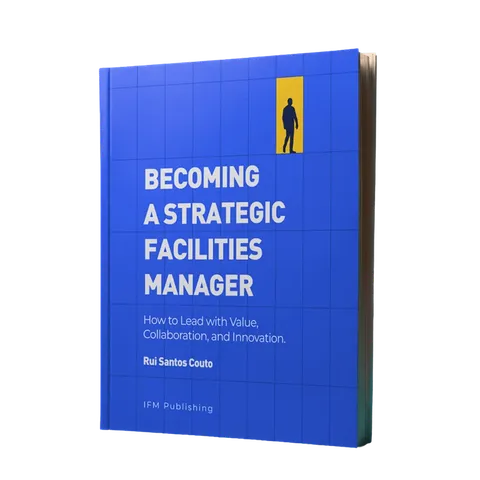 Learn more
Occupancy comes down to a shopping centre's ability to attract, retain and profit from tenants. Get infrastructure, security, climate control, cleaning, parking and maintenance right, and the whole place becomes easier for tenants to plan around.
For landlords, superintendents, operations and commercial teams, the sharper question is how much the operation actually protects rental income, cuts vacancy and holds up the site's commercial value.
The market data makes the point on its own. UK shopping centre vacancy stood at 16.9% in Q1 2026, according to Savills, but that headline figure hides a sharp split: CBRE reports that top-performing centres are nearing full occupancy while secondary sites continue to struggle. Location plays a part, but how well each one is actually run plays a bigger one.
Tenants expect reliability in the areas only the shopping centre controls: climate control in common areas, circulation, parking, and the general electrical infrastructure. This is where prevention rests entirely on the operation, with no responsibility shared with the tenant.
In practice, what tenants expect includes:
Stable climate control: thermal comfort drives dwell time and spend;
Smooth circulation: escalators, lifts and parking all affect access to shops;
Clear response times: call-outs need a deadline, an owner and follow-up;
An operation ready for peak periods: dates like Black Friday and Christmas concentrate revenue and leave no room for failure.
The market itself is shifting what tenants expect, too. Food and beverage has been one of the defining occupational trends of the past two years, according to Savills' Lucky Seven report, with dining, grab-and-go and leisure concepts increasingly doing the job that fashion anchors used to do on their own.
That shift raises the bar. A fashion anchor needs stable electrics and air conditioning. A dining anchor needs all of that plus extraction, grease traps and gas supply, with even less tolerance for failure.
A more predictable operation makes it far easier to defend rent, service charges and lease renewals.
Not every fault that affects a shop is the shopping centre's responsibility, and that split is usually written into the lease, not just assumed. Structural repairs, or anything affecting the building as a whole, typically sit with the landlord, and most commercial leases prevent those costs from being passed on to tenants through the service charge.
Take air conditioning that isn't cooling a shop properly. It might be that chilled water isn't reaching the unit (a structural fault, the landlord's problem), or that the tenant's own equipment has failed (the tenant's problem). Tenants rarely know which is which, so both scenarios end up as a complaint against the landlord.
Good operations handle this in two steps:
First response: check whether the common infrastructure, chilled water, power supply, is delivering what it should before deciding whether the fault sits with the landlord or the tenant;
Execution and recharge: where the fault is the tenant's but they've no contractor of their own on hand, the landlord carries out the work and bills it through, solving the immediate friction without picking up a cost that isn't theirs.
Faults that genuinely are the landlord's responsibility, poorly maintained toilets, call-outs that go unanswered, queues at the car park, cost more than the repair itself. They erode a tenant's trust in the landlord and hand them more leverage to push for a discount, a rent-free period, or better lease terms.
Lewisham Shopping Centre, owned by Landsec, is a real-world case in point. The centre is in the middle of a £160 million transformation, and crucially, it's staying open and trading throughout, so retailers keep their footfall and visitors keep their access while construction goes on around them.
That commitment to keeping the operation running has translated directly into leasing activity: 12 store renewals and new lettings over the past 12 months, with more brands signing up in 2026. As centre director Paul Redden put it, the level of activity shows just how integral the site remains to the area, even mid-transformation.
That points to four ways well-run infrastructure becomes a genuine commercial argument:
Attracting new brands: a stable operation lowers the perceived risk for brands weighing up whether to sign.
Lease renewals: SLA, uptime and response data give the landlord something concrete to bring to renewal conversations.
Existing tenants expanding: brands with a good operational track record are more confident taking on more space, opening a kiosk, or testing a new format.
Cutting vacancy: a well-regarded operation reduces friction, complaints and the erosion of trust that drives tenants out.
This matters because it lets the commercial team make the case with a real example, not just location, that the site delivers a reliable operation.
An Infraspeak survey of shopping centre operations managers found that almost every operation already tracks preventive (100%) and corrective (90%) maintenance. But only 34% track cost per asset, and just 24% monitor supplier performance in any structured way.
That gap is exactly where value gets left on the table. Knowing a call-out got resolved doesn't help in a negotiation. Knowing what it cost, and whether the same fault has already happened five times this year, does.
Two indicators do the real work here: fault history by area, which gets ahead of a tenant's objection before the renewal conversation even starts (the commercial team walks in already knowing what's coming, with the answer ready), and a readiness plan for seasonal peaks, which shows the tenant the operation was already prepared for high-demand periods, not scrambling to catch up.
Renewing a lease is an economic decision. A tenant weighs up sales, footfall, rent, service charges and location, but also the hidden cost of trading in that particular centre: time lost to call-outs, friction with the landlord, the risk of something failing on the busiest day of the year.
An unstable operation turns that hidden cost into time wasted on call-outs, friction with management, and a higher risk of failure landing on exactly the days that matter most for sales. A reliable one means less pressure to discount, more willingness to renew or expand, and less vacancy risk driven by friction alone.
A well-run operation protects rental income, strengthens renewals, and creates the conditions to attract and grow good tenants.
How can shopping centres improve occupancy?
Improving occupancy takes more than attracting new tenants. It means building a reliable operational environment, infrastructure that's actually available, fast response to call-outs, comfort for visitors, and data that supports commercial negotiations. The less operational friction there is, the easier it becomes to attract, retain and grow brands within the site.
What's the relationship between operations and tenant retention?
Operations directly shape how tenants perceive the value of a site. Recurring failures in climate control, circulation, parking, cleaning or response times increase friction and erode a tenant's trust in the landlord. A predictable operation does the opposite: it strengthens renewals, cuts down discount requests, and makes tenants more willing to expand.
Which operational indicators help reduce vacancy?
Most operations already track basic maintenance, but few track cost per asset or supplier performance in any structured way, and those are exactly the data points that hold up in a negotiation. Fault history by area and readiness for seasonal peaks are the two most useful indicators here.
See how Infraspeak can help your shopping centre centralise SLAs, call-outs, assets, suppliers and evidence to support operational, commercial and leadership decisions.


)
)
)