The World Cup of facilities management
Behind the biggest football tournament is the most complex multi-site FM operation ever attempted.
Behind the biggest football tournament is the most complex multi-site FM operation ever attempted.
It's time to break the reactive loop. Becoming a Strategic Facilities Manager shows you how.
 Learn more
16 stadiums. Three countries. 39 days. One specification that every one of them has to meet.
For five weeks in the summer, the United States, Canada and Mexico are hosting the biggest football tournament ever: The 2026 FIFA World Cup. But behind the football is something a lot less photographed: the most complex multi-site FM operation ever attempted.
Eight NFL stadiums converting from artificial turf to natural grass. Four retractable roofs that have to open and close on cue. A combined capital programme between $1.5 and $2.5 billion. 104 matches in just over five weeks.
The patterns that emerge at this scale are the same ones running through every well-managed infrastructure — retail chains, hospitals, hotel groups, manufacturing plants, you name it. They’re just amplified to the point where they're impossible to ignore.
In this guide, there are eight FM lessons we draw from the 2026 World Cup. Each one starts with a real venue, and ends somewhere you can take it on Monday morning. The scale may be different, but the discipline is the same.
Eight of the eleven US host stadiums are NFL grounds that run on artificial turf. FIFA mandates natural grass — either 100% natural, or hybrid with no more than 5–10% synthetic fibres stitched into a natural sward — for every match. That means eight full surface conversions, each reverting once the tournament ends.
The playing experience has to be uniform across all 16 venues, even though the climates, roof conditions, and turf histories couldn't be more different. Carolina Green ships Tahoma 31 Bermuda from North Carolina to MetLife. Tuckahoe Turf Farms supplies Kentucky bluegrass to Gillette and Lincoln Financial. West Coast Turf grows Bandera Bermuda in California's Central Valley for SoFi and Levi's. SIS Pitches reconstructs entire surfaces in Monterrey and Toronto.
Different farms. Different species. Different stadiums. One playing experience. They don’t depend on one single supplier — this uniformity comes from the FIFA pitch template, engineered over eight years by Professor John Sorochan at the University of Tennessee and Professor John "Trey" Rogers at Michigan State, with over $5 million in FIFA funding behind it.
The temptation in multi-site operations is to let each site find its own way… which is exactly how variability creeps in, and variability is where defects live. The move that scales is actually the opposite: one specification, applied everywhere, audited consistently — regardless of who's running the site or supplying the asset.
Write the specification once. Let the suppliers diverge. Let the asset standard hold.
Pick one critical asset class — HVAC filtration, lift maintenance, fire-door inspection, floor finishes. Write the standard once. Every site, every supplier, every contractor works to it. A hotel group running fifty properties, for instance, shouldn't have fifty different approaches to chiller servicing, or a single supplier working on all of them. One spec, fifty audits.
Infraspeak gives multi-site FM teams a single platform where standards, maintenance plans, and processes are defined once and applied consistently across every site. Whether you're managing three buildings or three hundred, your whole team — and your suppliers — work from the same system, with shared visibility into what's been done, what hasn't, and what's due next.
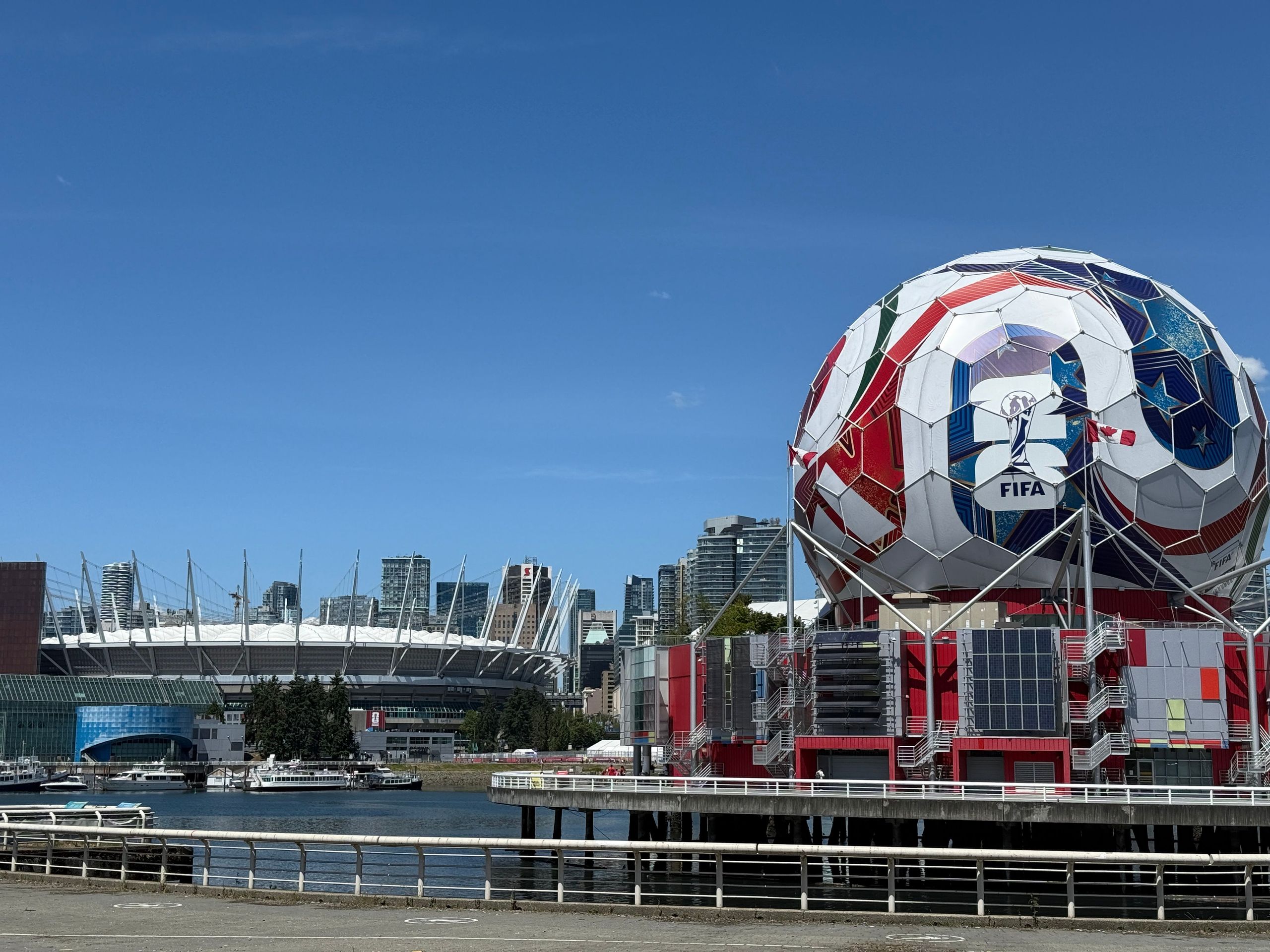
Mercedes-Benz Stadium's eight-petal kinetic roof retracts in eight minutes along 16 radial tracks — each petal weighing 1,600 tonnes, the motion inspired by the oculus of the Roman Pantheon. AT&T Stadium's two single-span trusses each stretch 373 metres, the longest on any building on Earth. NRG Stadium's 16,700 square metres of PTFE fabric and steel has just been re-membraned in a $35 million scope by Taiyo Kogyo and Birdair. BC Place runs the largest cable-supported retractable roof in the world.
These are mission-critical assets whose failure during a World Cup match would be visible to a billion people. The preventive maintenance regimes around them are years long, written by the original designers, executed by the operator, audited by FIFA before every fixture, and rehearsed in live test events.
The best operators also monitor condition between planned interventions — tracking readings, performance data, and anomalies — so they can act on what an asset is telling them.
Every estate has its version of these roofs. The lift your occupants take every morning. The chiller plant keeping people comfortable in August. The genset you hope to never start.
The asset whose failure you can least afford defines the maintenance regime everything else borrows from.
Identify the asset whose failure you can least afford. Map its maintenance regime as if an auditor is reviewing it next week — because eventually, one will be. Then ask whether you're monitoring its condition between interventions or just servicing it on a schedule. A hospital, for example, can't wait for its next planned visit to discover a problem with the ventilation system in a critical care ward. The data has to be there in between.
Infraspeak lets you build structured preventive maintenance programmes for your most critical assets — with custom schedules, technician checklists, and SLA controls built in. When calendar-based schedules aren't enough, Infraspeak Gear AI Asset Health Score analyses your asset data to flag risks before they become failures, so your team can act on evidence of actual equipment condition.
AT&T Stadium's central plant is rated at 11,000 refrigeration tons. It carries 97 kilometres of process piping and 1,450 tonnes of sheet-metal ductwork. On a closed-roof match day in Dallas (in summer, sealed against the Texas heat) peak demand pushes toward ten megawatts. The building holds the largest air-conditioned room on Earth.
Mercedes-Benz Stadium runs 29% below the ASHRAE 90.1 energy baseline through deliberate plant sizing, displacement air distribution, and a Johnson Controls Metasys building management system that knows exactly what every space is doing at any given moment. Lincoln Financial Field generates around 33% of its full-year demand on-site, through 11,108 solar panels and 14 micro wind turbines along its 11th Street façade.
Energy is a resilience problem, a cost problem, and a compliance problem, all at once. The operators who get this right map their peak day first, model the second-worst case — a chiller down on the hottest afternoon of the year — and build their energy strategy from there. Sustainability reporting falls out of that work naturally.
Map your peak day. Know what drives it. Plan for the second-worst case.
A retail estate's busiest trading day in August looks very different to a hospital on a winter Sunday, but both have a worst-case scenario worth planning for. Build the contingency before you need it. Your CFO will notice the cost argument; your sustainability lead will notice the rest.
Infraspeak tracks consumption across your sites over time, making it straightforward to spot patterns, outliers, and anomalies before they become crises. Pair it with Infraspeak Gear AI alerts and automations, and your team gets proactive notifications when readings fall outside expected ranges — so you're not finding out about energy problems on the day they hurt you.
In May 2026, Hard Rock Stadium hosts the Formula 1 Miami Grand Prix. Six weeks later, the same building hosts a World Cup group-stage match between Brazil and Scotland. In between: F1 paddock teardown, pitch reinstallation from the Dolphins-owned Loxahatchee sod farm, FIFA hybrid stitching, broadcast load-in, security perimeter reset.
There's no room for heroics. The turnaround works because the operator has done it before, written down what worked, and refused to let the team improvise around things that already broke once.
The same compression applies elsewhere in the tournament. NRG Stadium in Houston built its World Cup pitch in roughly a month against an industry-standard 13-week window. Mercedes-Benz Stadium removed its synthetic turf and asphalt sub-base, then installed natural grass plus a new SubAir vacuum-aeration system, all in six weeks.
The secret is standardisation. Documented sequences. Standard checklists. Repeatable processes that work the same way whether it's the first time or the 15th. Boring, repeatable processes are the most underrated FM tool there is.
Write the sequence. Time it. Improve it once a quarter.
Every shift change, every event setup, every quarter-end reset is a changeover. Write the sequence, time it, and then use the same checklist every time. A university facilities team turning over student accommodation between summer conference use and the new academic year (think hundreds of rooms, tight window, multiple contractors) either has that sequence documented or it doesn't. The ones that do finish on time.
Infraspeak lets you build reusable maintenance plan templates — standard sequences, standard checklists, standard audits — that apply consistently across assets, jobs, and sites. The Gatekeeper add-on enforces those checklists at the point of execution, so the procedure is followed every single time.
14 July 2024. Copa América final. Argentina vs Colombia at Hard Rock Stadium. An estimated 7,000 ticketless fans breached the outer perimeter. Kick-off was delayed by more than 75 minutes. Seven people were injured. A $14 million class-action settlement followed.
The post-incident report cited weak intelligence on crowd volume, an insufficient outer perimeter, and the ease with which photo tickets could be duplicated.
By the 2025 FIFA Club World Cup, the same operator was running a three-checkpoint enclosed campus, digital-only mobile ticketing, and an outer perimeter that started well before the gates. 11 months from failure to redesign.
That speed of learning is the real lesson. It depends on one thing: whether your team runs disciplined post-incident reviews and actually tracks the agreed changes. Not blame meetings. Learning reviews — what did we plan, what did we do, what did we miss, what changes on Monday. The data to make those reviews useful has to already be there when you need it.
Run a learning review on every significant incident inside 30 days. Then track the changes for a year.
After every significant incident, block the review before the week is out. Document what changed. A commercial real estate manager dealing with a flood in a basement plant room, for example, needs to know within 30 days whether the drainage inspection schedule was the problem, whether a supplier missed a service visit, and whether the same risk exists in three other buildings. That answer only exists if the incident history and maintenance records are already captured somewhere searchable.
Every incident logged as a work order in Infraspeak becomes part of a searchable, auditable history. Over time, that data surfaces the patterns — recurring failures, assets that keep coming back, response times that keep slipping. Then, analytics dashboards and Infraspeak Gear AI turn that log into something your team can act on, so learning reviews are based on what’s actually happening.
MetLife Stadium's World Cup pitch was meant to come from Tuckahoe Turf Farms in New Jersey. A harsh winter killed the crop. FIFA's contingency plan, written years earlier and covering 11 farms across three countries, pivoted to Carolina Green outside Charlotte, North Carolina. 20 truckloads of Tahoma 31 Bermuda drove almost 1000 kilometres up the eastern seaboard, refrigerated the whole way, just in time for the 13 June kick-off.
That pivot worked because someone had walked Carolina Green's farm two summers earlier and signed the framework agreement when it wasn't urgent. The relationship was live. The logistics were known. The backup was a tested, contracted alternative.
Most FM teams plan for the day a supplier is on a six-week wait list. The good ones plan for the year their primary supplier goes bankrupt. Your single point of failure is almost never the contract. Most often, it’s the relationship.
Backups have to be live, tested, contracted, and warm before you need them.
Identify the three suppliers you can't afford to lose. Then identify their backups. Visit the backup. Sign the framework. Run a dry order. Know the lead time before you need it. A facilities manager running a private hospital group who loses their sole medical-grade cleaning contractor on a Friday afternoon needs to already know who they're calling. That call should never be the first one.
Infraspeak Network™ connects your operation with your supplier network in one shared workspace — work orders, performance data, messaging, and reporting all in one place. You get a clear picture of how every supplier is actually performing, which makes it easier to know who your real alternatives are and whether you can trust them when it matters.
GEHA Field at Arrowhead Stadium opened on 12 August 1972. The Estadio Azteca opened on 29 May 1966. Together they'll host more than ten matches at the 2026 tournament — including the opening fixture in Mexico City and a quarter-final in Kansas City.
The Azteca rebuild has reinforced 60-year-old concrete sitting on a volcanic basalt bed, underneath a stadium that has now opened three World Cups. Arrowhead added a $2.2 million undersoil heating system in 2016, then rebuilt the pitch from scratch in May 2026 with a hybrid Bermuda surface and a vacuum-and-chilled-air turbine network. Neither building is new. Both are entering another generation of use.
The capital case for keeping an old asset is often the better one. The operating-cost case usually closes the argument — but only if you have the data to make it. Failure history, maintenance costs, depreciation curves… The repair-versus-replace decision looks very different when it's grounded in evidence.
A building is as old as its last refurbishment, and as good as the data you hold on it.
Audit one asset that someone has labelled "old" and earmarked for replacement. Pull its failure history. Calculate the cost per intervention over three years. Run the depreciation curve. A manufacturing plant that replaces a piece of production equipment on schedule rather than on evidence might be spending capital it doesn't need to — or deferring a replacement that was already overdue. The data tells you which one it is.
Infraspeak gives you a centralised record of every asset — specs, history, costs, and performance over time. The Economic Analysis add-on adds depreciation graphs and cost-per-intervention breakdowns, so the repair-versus-replace decision is one your team can defend with real data.
Mercedes-Benz Stadium was North America's first LEED (Leadership in Energy and Environmental Design) Platinum professional sports venue — 88 points, 29% below the ASHRAE 90.1 energy baseline, over 90% of waste diverted from landfill. Hard Rock Stadium holds LEED Gold v4.1 O+M and has cut single-use plastics by 99.4%, removing 2.8 million plastic units a year. Lumen Field in Seattle is TRUE Gold certified and Salmon-Safe. Levi's Stadium runs on 85% recycled water. The stormwater vault under Mercedes-Benz Stadium doubles as flood defence for the Vine City neighbourhood.
Every one of these is a cost line. The LEED points are a byproduct of decisions made because they made financial sense first — chiller load reduction, fewer waste collections, lower water bills, compliance risk avoided. The compelling green retrofit pays back in kilowatt-hours and waste hauls per year. Everything else follows.
Lead with the operating-cost line. The ESG slide is the easy part afterwards.
Build the sustainability case in Opex terms before you build it in sustainability terms. What does this save per year in energy costs? How many fewer waste collections? What compliance exposure does it remove? A retail chain reducing water consumption across 200 stores doesn't need a sustainability strategy to justify the investment, as long as there's a spreadsheet showing the saving per site per year. Start there. The reporting writes itself from those numbers.
Infraspeak tracks energy, water, and other consumption metrics across your sites — giving you the data to measure the impact of efficiency investments and report on progress over time. The Budget Management app lets you track what sustainability initiatives actually cost versus what they save, so the business case stays grounded in real numbers.
Infraspeak is the collaborative FM platform that connects people, processes, and data across your entire operation — using predictive intelligence and AI to break down silos, blind spots, and overload.
We help FM teams in more than 40 countries run the kind of disciplined, connected operation these lessons describe — where old buildings keep performing, critical assets get attention before they fail, and supplier sprawl turns into a single audit trail.
The patterns throughout this piece describe a stadium operator running sixteen sites under FIFA scrutiny. But they also describe a hospital group running 30 sites under regulator scrutiny, or a retail chain running 150 sites under a brand standard.
FM is moving fast — from reactive to proactive, from scattered data to predictive intelligence, from single assets to whole ecosystems. But traditional FM systems haven’t kept up. They add to the problem by creating barriers and admin that keep teams stuck in a reactive loop of short-term fixes over long-term value.
Infraspeak breaks that loop, bringing FM teams, contractors, customers, and management together in one connected platform that keeps everyone aligned and productive. With collaboration, intelligence and flexibility built in, it gives you real-time clarity, automates admin, and frees your team to focus on the work that really matters.
Preventive maintenance compliance
Multi-site visibility
Asset criticality
Supplier coordination
Energy and consumption tracking
Audit and SLA reporting
Incident learning loops
Sources: FIFA tournament communications and host-city press portals (May 2026); stadium operator releases; specialist press (Stadium Business, Coliseum, Soccer Stadium Digest, Sports Video Group); national press (Reuters, AP, ESPN, CBS, Globe and Mail, Reforma); academic publications from the University of Tennessee turfgrass programme and Michigan State University; architectural and engineering publications from Populous, HOK, HKS, Geiger Engineers, Thornton Tomasetti, Birdair, Uni-Systems, SIS Pitches, West Coast Turf, Tuckahoe Turf Farms and Carolina Green.


)
)
)