Maintenance Backlog: what it is and how to calculate it
The Maintenance Backlog refers to the set of planned maintenance tasks that have not been carried out at a specific point in time.

The Maintenance Backlog refers to the set of planned maintenance tasks that have not been carried out at a specific point in time.

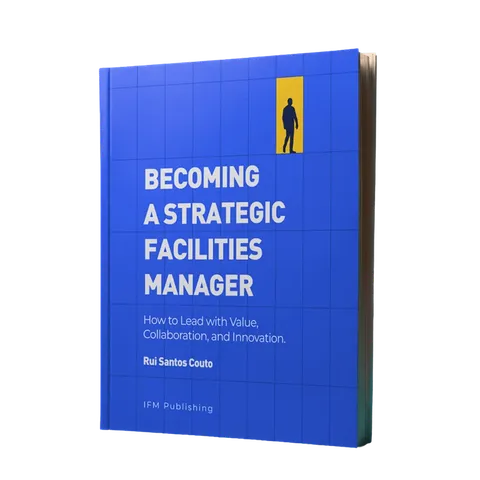
It's time to break the reactive loop. Becoming a Strategic Facilities Manager shows you how.
 Learn more
The Maintenance Backlog refers to the set of planned maintenance tasks that have not been carried out at a specific point in time. It represents an accumulation of pending work needed to keep an organisation's assets in good condition.
In asset management, the Maintenance Backlog is a term that deserves attention, as this indicator can have a significant impact on operational efficiency and profitability. Asset management software can help monitor and control this backlog effectively. How to calculate the Maintenance BacklogThe backlog calculation can vary depending on the organisation and its complexity. However, a commonly used formula is:
Backlog = Planned Tasks – Completed Tasks
Where “Planned Tasks” are the maintenance activities scheduled for a given period, and “Completed Tasks” are those actually completed in that same period:
List all the maintenance tasks that were scheduled or planned to be carried out in a specific period of time. These tasks can include inspections, repairs, replacements and any other type of preventive or corrective maintenance.
Next, identify and record all the maintenance tasks that were actually carried out during the same period. This means knowing which tasks were completed according to plan.
Once you have the lists of planned tasks and completed tasks, you can calculate the Maintenance Backlog.
The result of the calculation gives you a figure representing the number of pending or overdue maintenance tasks in the specified period.
A negative backlog means more tasks were completed than had been planned, which can indicate highly efficient maintenance management. On the other hand, a positive backlog indicates there are pending tasks, which may point to the need to improve maintenance management.
It's important to note that this is a basic formula that gives an overview of the state of the Maintenance Backlog. However, in more complex environments, you can consider additional formulas and metrics that allow more detailed tracking, such as backlog by task type, by specific asset or by area of the organisation.
Effective maintenance backlog management also requires proper control of the materials and spare parts needed to complete pending tasks. In this context, inventory management software can be essential to ensure resources are available and to prevent a lack of materials from contributing to a growing backlog.
In addition, using CMMS software can make tracking and calculating the backlog more efficient. (asset management software) Here are some of the most common additional formulas used to calculate and measure the Maintenance Backlog:
Total Backlog = Planned Tasks – Completed Tasks
Backlog by Task Type = Planned Tasks (specific type) – Completed Tasks (specific type)
Backlog by Asset or Equipment = Planned Tasks (specific asset) – Completed Tasks (specific asset)
For organisations that manage multiple facilities and need to calculate the backlog by area or department, facility management software can provide a comprehensive view of the maintenance backlog across all locations, making it easier to compare and prioritise between different areas.
Backlog by Area or Department = Planned Tasks (specific area) – Completed Tasks (specific area)
Backlog in Working Days = (Total Backlog / Daily Execution Rate)
Where the “Daily Execution Rate” represents the number of maintenance tasks that can be completed in one working day. This metric gives an estimate of how many working days are needed to clear the backlog.
Backlog in Monetary Value = (Estimated Cost of Planned Tasks – Actual Cost of Completed Tasks)
This formula calculates the monetary value associated with the maintenance backlog, taking into account the estimated costs of planned tasks and the actual costs of completed tasks.
Relative Backlog (%) = [(Planned Tasks – Completed Tasks) / Planned Tasks] * 100
This metric expresses the backlog as a percentage of total planned tasks. It shows how many tasks were left pending relative to the plan.
Average Backlog per Period = (Opening Backlog + Closing Backlog) / 2
This formula is used to calculate the average backlog over a specific period. It is useful for smoothing out fluctuations in the backlog over time.
Backlog by Priority = Sum of (Planned Tasks by Priority – Completed Tasks by Priority)
When maintenance tasks classified by priority require the intervention of external technical teams or specialised services, field service management software can coordinate these resources efficiently to reduce the backlog more effectively.
Classifying maintenance tasks by priority and calculating the backlog for each priority level can help prioritise maintenance actions, and:
✅ Allows more accurate planning of maintenance tasks, minimising the impact on operations.
✅ Can reduce long-term costs and increase operational efficiency.
To maximise these benefits and achieve more significant cost reductions, implementing CAFM software can help organisations keep tighter control over their maintenance backlog and optimise the overall management of their assets.
✅ Helps organisations allocate maintenance budgets more accurately.
An unmanaged Maintenance Backlog can have a number of negative consequences for an organisation. These include:
Increased Costs: Delayed maintenance can lead to higher costs in the long run, as a lack of attention to assets can cause costly failures.
Reduced Operational Efficiency: A high backlog can affect operational efficiency, resulting in unplanned downtime and lower output.
Safety Risks: A lack of proper maintenance can increase the risk of accidents and injuries in the workplace.
For critical or high-risk assets, such as machinery operating at high temperatures or safety equipment, the consequences of delayed maintenance can be even more serious. These can include severe damage to machinery, danger to workers and significant replacement costs.
Beyond these operational and safety risks, the maintenance backlog can also affect the organisation's regulatory compliance. For this reason, having compliance management software is essential to ensure critical tasks are carried out in line with regulatory requirements and to avoid additional penalties.
📝 Read also: What is DFMEA — Design Failure Mode and Effects Analysis
Organisations can use the maintenance backlog as a basis for strategic decision-making. For example, by identifying the areas with the largest backlogs, additional resources can be allocated to tackle those issues and improve asset reliability.
It is also possible to:
Use the Total Backlog to determine future workload and plan the resources needed, such as staff, time and materials, to tackle the backlog effectively.
Prioritise maintenance tasks and allocate resources according to the established priorities.
Adjust the preventive maintenance schedule (or predictive schedule) based on the Total Backlog.
Consider reviewing and improving your maintenance processes, which may include adopting best practices or investing in more efficient technology.
A solution like Infraspeak can contribute to effective maintenance backlog management through:
Infraspeak automates maintenance management, which means you can schedule preventive and corrective maintenance tasks efficiently. This prevents unscheduled tasks from piling up and helps keep the backlog under control.
The platform offers smart scheduling, which means it prioritises maintenance tasks according to their criticality and urgency, using Artificial Intelligence. This lets you tackle the most important tasks first, helping to reduce the backlog.
Infraspeak lets you allocate and manage the resources needed to tackle the backlog, including staff, equipment, critical assets and materials. You get a clear view of resource availability and can make sure they are allocated efficiently.
You can analyse the performance of maintenance tasks in real time, identify trends and make decisions based on solid data.
The platform supports integration with sensors and IoT devices, enabling real-time monitoring of assets and systems. This contributes to early detection of problems and proactive scheduling of maintenance tasks.

The collaborative platform for total visibility of facility management operations. Talk to a specialist


)
)
)