The FM path: from the basement to the boardroom
Teams that build discipline through planned maintenance, better records, and clearer visibility give themselves a better chance to protect assets and improve performance.
Teams that build discipline through planned maintenance, better records, and clearer visibility give themselves a better chance to protect assets and improve performance.

It's time to break the reactive loop. Becoming a Strategic Facilities Manager shows you how.
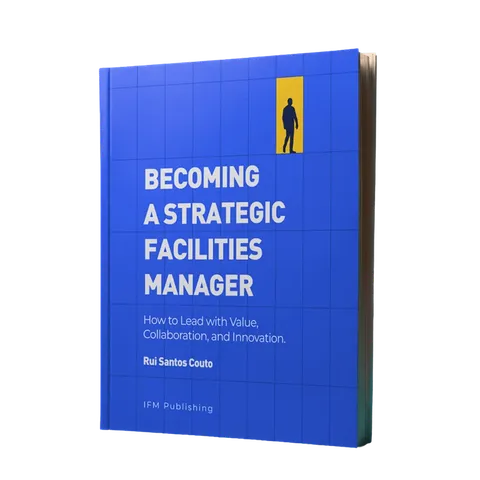 Learn more
(This article was written by Wynand Langeveldt, Executive Director at North77 Facility Solutions)
Facilities management in retail is a little like an iceberg. The visible part is familiar: repairs, cleaning, inspections, call-outs. But most of the work that protects a retail asset sits underneath that line.
Retail facility management is not only about changing lightbulbs or emptying bins. It affects how long assets last, how safely a property operates, how tenants experience the space, and how customers feel when they walk through it. When it works, most people barely notice it. When it fails, everyone does.
Sears is a useful reminder of what can happen when the physical environment is allowed to decline. Its fall had many causes, including its struggles with e-commerce, but poor stewardship of the retail estate also played a part. Stores that feel tired, neglected, or difficult to use do not simply create operational problems. Over time, they weaken the customer experience and the value of the asset itself.
This is why property owners need to look below the surface of daily operations. The “dark side of FM” is not sinister. It is simply the work most people do not see: infrastructure, compliance, energy use, contractor performance, asset condition, stock and parts management, and the flow of information between sites, service providers, and head office. It is the foundation that allows the public-facing retail experience to feel seamless.
The modern Facility Manager has moved closer to the boardroom because the problems they manage are now boardroom problems: cost, risk, resilience, customer experience, and asset value.
According to the JLL Global State of Facilities Management Report, 84% of surveyed facilities management and boardroom leaders are concerned about cost. Other reported concerns include economic uncertainty, deferred maintenance and ageing assets, technology integration, and labour shortages in skilled trades.
That pressure changes the FM brief. Teams are being asked to maintain or improve building performance while absorbing higher energy, labour, material, and contractor costs. Every major expense now needs a clearer link to ROI and measurable value. Planned maintenance, asset data, and lifecycle planning become much easier to defend than repeated emergency call-outs.
This does not remove the practical reality of the job. FM still involves leaks, breakdowns, alarms, failed systems, supplier issues, and urgent calls from tenants. The difference is that those incidents now need to feed a better operating model, not just another repair ticket.
Managing a retail asset is a balancing act. When the site works, FM disappears into the background. When it does not, the FM team becomes the centre of attention.
Four problems tend to pull retail FMs back into firefighting.
Compliance is not a filing exercise. It is one of the ways a property stays open, insurable, and legally protected.
Fire safety, HVAC systems, lifts, solar infrastructure, water systems, emergency lighting, and statutory inspections all create obligations that cannot be handled casually. A missed audit or expired certificate can lead to fines, denied insurance claims, forced closures, or serious reputational damage.
In retail, compliance is not admin. It is part of the licence to operate.
One of the most fragile systems in any facility is the person who “just knows” where everything is.
They know which contractor fixed the chiller last time. They know which store always has the same leak. They know which asset is being nursed through another season. But if that knowledge lives only in someone’s head, a spreadsheet, or a WhatsApp thread, it is not organisational knowledge. It is a dependency.
When that person leaves, changes role, or is unavailable during a crisis, the operation loses context.
Moving to a digitised single source of truth does not make the work less human. It makes the knowledge less fragile. Asset data, maintenance schedules, contractor history, compliance records, and site notes need to stay with the organisation, not with one person’s memory.
Every FM knows the repair-versus-replace dilemma. The issue is rarely obvious in the moment. Repairing may seem cheaper today, but if an asset is already near the end of its useful life, repeated fixes can quietly consume the budget that should have been used for replacement.
Without reliable asset history and real-time information, the conversation becomes opinion against opinion. Strategic FM needs better visibility: condition, remaining life, repair frequency, downtime, cost history, and impact on the tenant or customer experience.
The aim is not to replace everything early. It is to stop short-term OPEX decisions from damaging the long-term CAPEX plan.
In retail, the Facility Manager is often the silent partner behind the tenant’s commercial performance.
A broken lift, dirty washrooms, poor lighting, or failing air conditioning system does more than create inconvenience. It changes how long shoppers stay, how comfortable staff feel, and how confidently tenants operate. If the environment becomes unpleasant, people leave sooner. Some do not come back.
The Industry 5.0 conversation is useful here only if it brings the focus back to people. Retail spaces are no longer built only for transactions. They are built for experience, dwell time, comfort, and repeat visits.
That means FM has a direct role in air quality, temperature, acoustics, cleanliness, lighting, accessibility, and ambience. These are not soft details. They shape how a retail property performs.
In many retail environments, maintenance teams get trapped in the reactive loop. The pattern is simple.
A critical asset fails. Technicians are pulled away from planned tasks. Preventive work slips. Other equipment starts to suffer. Another failure appears. The team returns to the beginning, only now with less time, more pressure, and more maintenance debt.
In a supermarket, a cold-chain refrigeration failure can threaten product loss and trading revenue. In a shopping centre, an escalator failure on a peak weekend can damage footfall, tenant confidence, and the landlord relationship. The repair invoice is only one part of the cost.
Emergency repairs are often far more expensive than planned maintenance because they bring expedited procurement, after-hours labour, downtime, disruption, and lost revenue. They also create a cultural cost. Teams that spend every week firefighting become tired, cynical, and less able to improve the system.
Breaking the loop does not mean making everything proactive overnight. That is not realistic.
Start with the assets that hurt the most. Look for the equipment that causes the most downtime, the highest emergency spend, or the biggest disruption to tenants and shoppers. Focus there first.
Protect the maintenance budget. IFMA’s benchmark of spending 3% to 5% of Current Replacement Value on maintenance each year is not just a cost guideline. It is a reminder that maintenance protects capital.
Move from gut feel to evidence. Sensors, controllers, and a CMMS can help teams move from manual detection to earlier intervention. The point is not technology for its own sake. The point is to know what is happening before the failure becomes visible to everyone else.
Finally, treat repeated failures as a signal. If the same system fails twice, do not only repair it. Ask why it is failing. Root Cause Analysis prevents teams from treating the same symptom again and again while the real problem stays in place.
In the traditional retail model, Facility Management was often treated as an unavoidable overhead. That view is now too narrow.
A well-run facility protects revenue, extends asset life, reduces operational risk, improves tenant confidence, and creates a better environment for shoppers and staff. The CFO may not care about every operational detail, but they will care about avoided CAPEX, lower emergency spend, fewer disruptions, stronger compliance, and better asset performance.
McKinsey & Company research cited in the original draft points to potential labour cost reductions of 20% to 30% and 40% faster resolution of critical failures when organisations shift towards better facility operations. Those figures are useful, but the stronger argument is broader: FM creates value when it reduces waste, prevents avoidable failure, and gives leadership better control over the asset.
That value can be understood through five connected areas.
Breaking the reactive loop is a form of capital preservation. Extending the usable life of HVAC systems, lifts, generators, refrigeration, and other high-value infrastructure can defer major CAPEX and improve cash flow.
The business case is not only that assets last longer. It is that replacement decisions become more deliberate, less panicked, and better aligned with the property’s long-term plan.
Energy, water, and waste are among the most volatile operating costs in retail real estate. Better FM turns these costs into areas of control.
Sustainable energy strategies, waste reduction, and improved building performance can support the bottom line while reducing exposure to resource scarcity and ESG risk. The FM team is often where carbon commitments become operational reality.
A modern CMMS reduces risk by replacing scattered knowledge with a structured operational record.
This includes asset data, work orders, contractor performance, compliance documentation, service history, inventory, and recurring issues. With better data, teams can plan work, spot patterns, and make decisions earlier.
The goal is not to build a digital twin because the phrase sounds impressive. The goal is to understand the operation well enough to manage it before it becomes a crisis.
Strategic FM reduces exposure to unfunded liabilities. Strong compliance management can lower the risk of denied insurance claims, municipal fines, safety incidents, and reputational damage.
It also gives leadership confidence that the basics are under control. In retail, that confidence matters. A single incident can affect tenants, shoppers, staff, insurers, and regulators at the same time.
Vendor management is another area where value leaks quietly.
Reactive procurement often leads to unfavourable terms, rushed decisions, inconsistent service, and unclear accountability. A more structured approach gives FM teams better control over service levels, contractor performance, pricing, and response times.
Procurement is not just about paying less. It is about knowing what you are buying, why you are buying it, and whether it is improving the operation.
Proving FM value on a balance sheet is not always simple.
Some value is intangible. A better customer experience, stronger tenant confidence, or improved employee morale is harder to price than a lower utility bill.
Some value arrives slowly. Asset life extension and preventive maintenance often pay back over years, while many businesses still work to quarterly expectations.
Different stakeholders also define success differently. A CFO may focus on cost reduction. A Marketing Director may care more about the look and feel of the space. An Operations Director may care about uptime, safety, and fewer interruptions.
The standard ROI formula helps bring those priorities into the same conversation:
ROI = Net Benefit from FM / Total Cost of Investment x 100%
The Total Cost of Investment includes FM software and technology, staff training and salaries, equipment upgrades, service provider fees, and consulting costs. The Net Benefit includes operational savings, increased asset lifespan, reduced downtime risk, improved space utilisation, and productivity gains.
The formula matters because it shifts the conversation from “FM needs more budget” to “FM can protect and create value if we invest in the right things.”
Retail FM has moved well beyond the old basement image. It still involves practical, physical, day-to-day work, but the consequences of that work are now strategic.
Breaking the reactive loop helps retail properties move from constant firefighting to planned care. It reduces maintenance debt, protects asset value, and gives teams more control over risk and cost.
A single source of truth is just as important. When communication, asset history, compliance records, and contractor knowledge are scattered across people, inboxes, and WhatsApp groups, the operation becomes fragile. When that knowledge is captured properly, it becomes an organisational asset.
The strongest retail FM teams are no longer only fixing what breaks. They are helping shape spaces that are safer, cleaner, more comfortable, more resilient, and easier to operate. In a sector where experience and asset performance are closely linked, that work belongs much closer to the boardroom than the basement.
This article draws on frameworks, research, and standards from IFMA, JLL, Verdantix, Gartner, McKinsey & Company, Infraspeak, and SAFMA, alongside practical experience from North77 Facility Solutions.


)
)
)