How operational management contributes to ESG goals in shopping centres
How can you improve ESG in shopping centres? See where to start with energy, water, waste and asset lifespan, backed by facilities management.

How can you improve ESG in shopping centres? See where to start with energy, water, waste and asset lifespan, backed by facilities management.

It's time to break the reactive loop. Becoming a Strategic Facilities Manager shows you how.
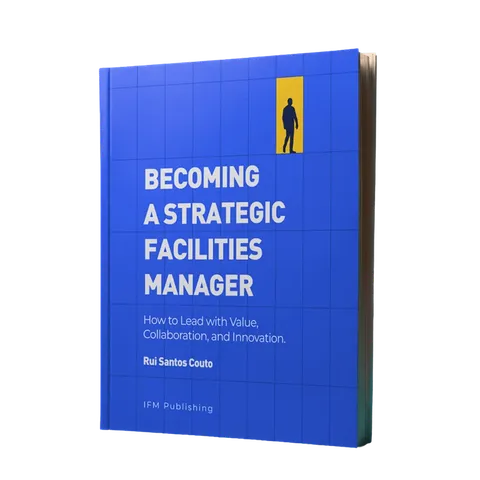 Learn more
ESG (Environmental, Social and Governance) in shopping centres tends to conjure up images of certifications, corporate reports and targets handed down from leadership. On the ground, though, most of a development's environmental, social and financial results are built in the day-to-day running of the place.
Energy, water, waste, asset performance and supplier management already sit squarely within the remit of operations, engineering and facilities teams. The difference being that, well managed, these same areas cut costs and lift efficiency, but also generate the evidence ESG targets are built on.
The question worth asking is how to turn the operational work already happening every day into results the business can point to. That's what this article sets out to do.
Energy efficiency is usually where the biggest savings, and the biggest environmental wins, are hiding in a shopping centre. Yet most operations still just glance at the bill each month.
The trouble with total use is that it hides exactly where the waste is happening.
A sharper operation digs into:
which areas are burning through more energy than they should;
which kit has quietly become less efficient over time;
which assets spike in use after a failure or a repair;
which times of day carry demand peaks that shouldn't be there.
Rather than eyeballing total use for the whole site:
break use down by area;
track it system by system for anything critical;
cross-reference energy data against maintenance history;
flag usage spikes after corrective work;
benchmark similar assets against one another.
Indicator | What it reveals |
kWh per m² | Overall energy efficiency |
Use by HVAC system | Where optimisation would pay off |
Energy cost per visitor | Operational efficiency |
Usage deviations | Possible failures or waste |
Preventive maintenance and ESG are more closely linked than most people assume. Kit that's properly maintained draws less power, breaks down less, and simply lasts longer.
Water strategy in shopping centres usually starts and ends with total use. But a large shopping centre can get through a volume of water on a par with a town of 5,000 people, according to an academic study of Brazilian shopping centres published in the journal Engenharia Sanitária e Ambiental. The specifics are Brazilian; the underlying demand isn't unique to one country, any development with this kind of footfall and tenant mix faces the same pressure.
A good chunk of that water is wasted for entirely operational reasons: leaks, plumbing faults, inefficient cooling towers, corrective work that drags on too long. The real challenge is spotting where water is being wasted, quickly enough to act on it, not simply measuring how much gets used.
Water, waste and infrastructure are tangled together in food court areas especially, and all three demand closer attention whenever footfall spikes.
Build inspection routines around the areas that matter most:
restrooms;
plant rooms;
cooling towers;
irrigation systems;
technical areas;
the food court.
On top of that:
log every leak as an operational occurrence, not a one-off;
track recurrence by area;
monitor average repair time;
compare use across similar periods.
Worth reading alongside this: Food courts: turning a critical area into an operational advantage.
Indicator | What it reveals |
m³ per visitor | Usage efficiency |
Recurring leaks | Structural problems |
Repair time | Operational efficiency |
Use by area | Where to improve |
The same study found that a water reuse reservoir of 100 to 400 m³ typically pays for itself within two years, cutting non-potable water use by 20% to 50%.
Grand Plaza Shopping, in the Brazilian city of Santo André, is one example worth studying. After expanding its effluent treatment plant, it now produces 6,000 to 10,000 m³ of reused water a month, enough to cover the entire non-potable demand of the site (irrigation, cleaning, toilet flushing). By 2026, it had also pushed landfill diversion past 90% and moved to 100% renewable energy.
Waste management gets filed under "environmental obligation" more often than it gets recognised for what it also is: a solid proxy for operational quality.
Some operators take this further than most. ReTuna Återbruksgalleria, in Eskilstuna, Sweden, is the world's first shopping centre built entirely around reuse and repair, every unit sells second-hand, repaired or upcycled goods, turning what would otherwise be waste into the mall's whole retail proposition. Most operations won't go that far, but the underlying discipline still applies: collection alone doesn't close the loop. What happens to material after it leaves the building is just as important as how it's sorted on the way out.
When collection breaks down, it shows up fast, in the visitor experience, in the food court, in how tenants talk about the mall.
Which is why waste deserves the same operational scrutiny as anything else, not just a volume tally at the end of the month.
Hold suppliers to evidence and indicators, not promises.
Track:
collection frequency;
delays;
recurring incidents;
disposal certificates;
volume recycled;
waste generated by area.
Indicator | What it reveals |
Recycling rate | How effective the programme actually is |
Waste per visitor | Operational efficiency |
Collection SLA | Supplier performance |
Incidents by area | Where the real pressure points are |
This is where facilities management and ESG overlap most clearly. Strip out the processes, suppliers and evidence, and sustainability is just talk.
Sustainability discussions tend to jump straight to replacing equipment. More often than not, though, the smarter move is squeezing more life out of what's already installed.
Chillers, pumps, lifts, escalators, electrical systems, security kit: these are serious capital investments. Run them poorly and they draw more power, fail more often, and need replacing years before they should.
Lifts are a good illustration. Sensors paired with predictive algorithms are already cutting unplanned downtime by up to 70%, according to recent research into predictive maintenance in the sector.
Poorly maintained assets don't just cost money and carbon. They widen a development's exposure to audits, inspections and regulatory slip-ups. More on that in ESG obligations and best practices for compliance in shopping centres.
Let the data decide whether to maintain, upgrade or replace.
Track:
MTBF (mean time between failures);
MTTR (mean time to repair);
cost per asset;
failure recurrence;
energy use;
maintenance history.
Indicator | What it reveals |
MTBF | How often things fail |
MTTR | How fast recovery happens |
Recurrence | Structural issues |
Cost per asset | Investment efficiency |
Energy use | Operational performance |
Extending an asset's life is a financial call and an environmental one at the same time. Fewer failures mean less waste, fewer panic replacements, and a lot more predictability.
Demonstrating results is arguably harder than running the initiatives that produce them, and it's a challenge that's about to get a lot more formal. The ISSB's IFRS S1 and S2 sustainability disclosure standards are now adopted, or being phased in, across more than 28 jurisdictions, together accounting for over 60% of global GDP. The UK has its own version, UK SRS S1 and S2, in force since February 2026.
Listed shopping centre groups across multiple markets are directly in scope, and the same pressure for reliable operational data is likely to trickle down to the assets they manage, wherever they sit. Companies already gearing up for the new standard flag two recurring challenges: upskilling teams, and getting data transparency and security right.
None of that works without solid operational information underneath it. Without reliable records, investment is hard to justify, progress is hard to track, and reporting to investors or auditors becomes a scramble.
Operations earn their keep on ESG when they can answer hard questions with data, not estimates. A handful of indicators do most of the work here, turning sustainability from a once-a-year exercise into something managed continuously:
ESG goal | Data required |
Reduce energy consumption | Use data + maintenance history |
Reduce water use | Inspections + incidents + usage data |
Improve recycling | Evidence + volume collected |
Extend asset lifespan | MTBF, MTTR and preventive records |
Improve supplier performance | SLA and evidence of execution |
Automation, sensors and AI are increasingly doing the heavy lifting here, flagging deviations, predicting failures, and producing data solid enough to act on. More in AI in shopping centres: 5 practical applications for operations and facilities.
Sustainability in shopping centres rarely hinges on one big project. More often, the first real gains come from tightening up processes the team already runs every day.
Those processes sit inside a wider operational strategy, one that ties infrastructure, experience, compliance, suppliers and overall performance together.
Energy, water, waste and assets are where operational efficiency and ESG genuinely overlap. The better an operation measures, maintains and coordinates its resources, the more it can cut impact, control cost, and create value the business actually notices.
For the fuller picture of how these pieces connect to infrastructure, experience and performance, see Operational management for shopping centres: how to improve infrastructure, experience and performance.
Improving ESG in shopping centres means building an operation that's efficient, predictable, and run on data, not just setting environmental targets.
A single shopping centre can throw off millions of lines of data a year from energy and water sensors alone, far more than any team can turn into decisions unaided. Infraspeak organises that data by asset, supplier and area, turning operational efficiency into evidence of sustainability.
How can I improve ESG in shopping centres?
Start where operations already have control: energy, water, waste, and asset maintenance. Between them, these areas account for most of the environmental impact and most of the efficiency upside.
What's the relationship between facilities management and ESG?
Facilities management sits at the intersection of maintenance, suppliers, resource use and operational indicators, which puts it right at the centre of delivering and proving ESG targets.
Which operational indicators help track ESG?
Energy use, water use, waste generation, asset performance, failure recurrence and maintenance indicators between them cover most of what's worth measuring.
If your team is still leaning on spreadsheets, disconnected systems and scattered data to track use, maintenance and environmental indicators, it might be time to rethink the approach.
Talk to an Infraspeak specialist about turning operational efficiency into ESG results you can actually measure: book a demo.


)
)
)